Home » All Articles » Hair Breakage » Could Your Hairstyle Be Contributing to Hair Loss?
Could Your Hairstyle Be Contributing to Hair Loss?
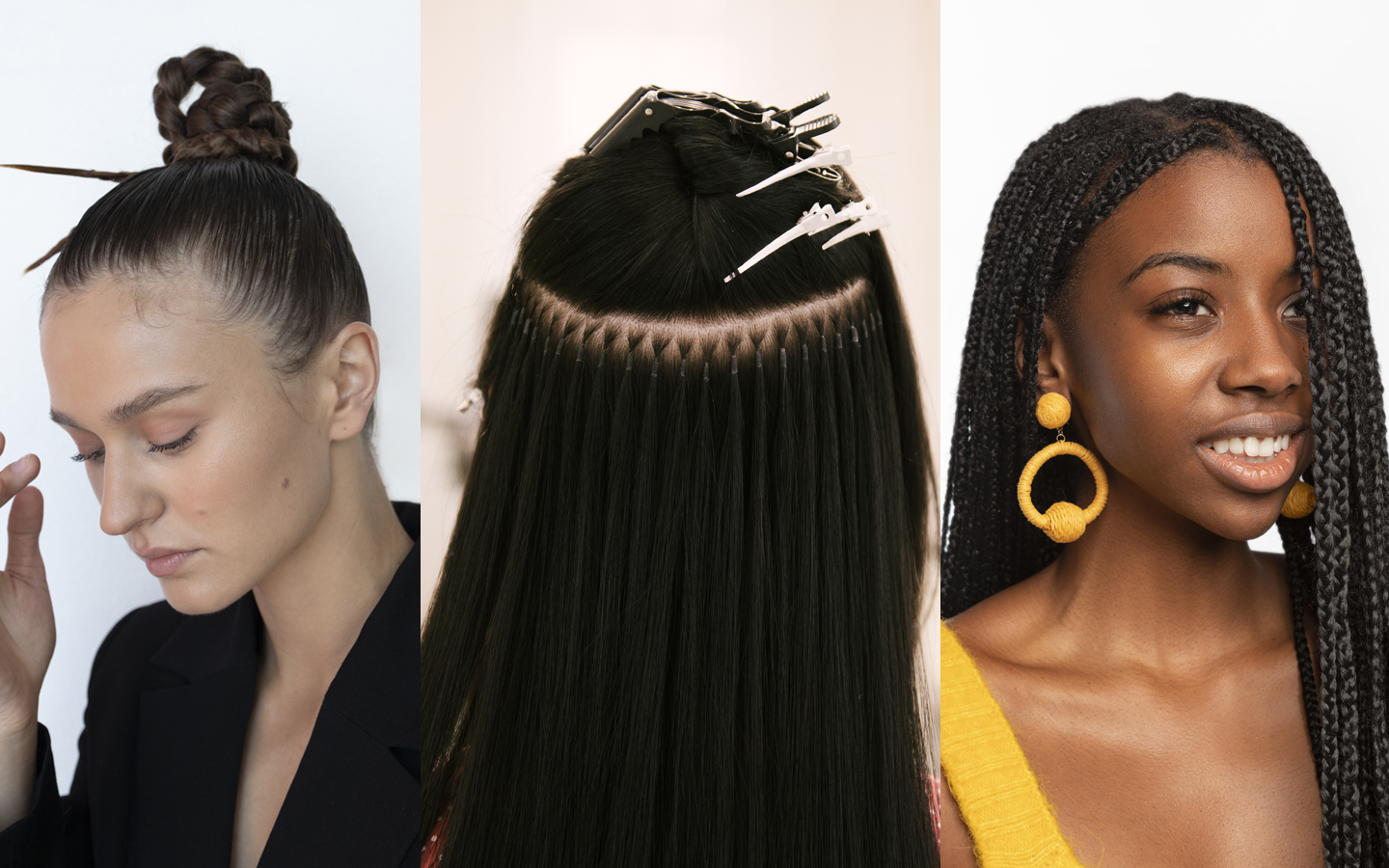
We tend to think of hair loss as something that happens because of genetics, hormones, age or health. But sometimes the cause is much more physical.
Traction alopecia is hair loss caused by repeated pulling or tension on the hair. It can develop when the same areas of the scalp are placed under stress again and again through tight hairstyles, extensions, braids, ponytails, buns, weaves or other styling practices.
And one of the most important things to understand about traction alopecia is that, particularly in its early stages, changing what is putting your hair under tension can make a significant difference.
The problem is that many people don’t recognise the warning signs until noticeable thinning has already begun.
What exactly is traction alopecia?
Every strand of hair grows from a follicle beneath the surface of your scalp. When hair is repeatedly pulled tightly from the same follicle, that constant mechanical stress can begin to interfere with it.
At first, the effects may be relatively subtle: broken hairs, tenderness, itching or thinning around the areas experiencing the most tension. But if the pulling continues for long enough, repeated injury can eventually damage the follicle itself.
In its earlier stages, traction alopecia is generally considered non-scarring and hair may regrow once the source of tension is removed. With prolonged or severe traction, however, follicles can become permanently damaged and scarred, making the resulting hair loss permanent.
That is why early recognition matters.
What causes traction alopecia?
Traction alopecia is not caused by one particular hairstyle. It is caused by tension.
Any hairstyle or styling practice that repeatedly pulls on the same area can potentially create a problem. Common examples include:
- Very tight ponytails or buns
- Tight braids or cornrows
- Weaves and hair extensions, particularly when they are heavy or attached tightly
- Styles that repeatedly pull the hair backwards from the hairline
- Tight clips, bands or head coverings
- Very long or heavy hair that consistently places tension on particular areas
The areas affected depend on where the pulling occurs. For someone who regularly wears a tight ponytail, for example, thinning may become noticeable around the temples and front hairline. Braids or extensions may create thinning around attachment points or between braided sections.
Chemical processing can add another layer of vulnerability. Relaxing, bleaching, colouring and frequent heat styling do not themselves cause traction alopecia in the same way that mechanical pulling does, but chemically or thermally stressed hair may be more fragile and prone to breakage. The British Association of Dermatologists notes that the risk of traction alopecia may be increased when high-tension hairstyles are combined with chemical treatments such as relaxers.
In other words, pulling tightly on hair that is already compromised is not a great combination.
The early warning signs are worth paying attention to
Traction alopecia usually develops gradually rather than appearing overnight.
One of the first things you may notice is that your hairline simply doesn’t look as dense as it once did. There may be shorter broken hairs around the temples or edges, or a particular area may seem to be becoming progressively thinner.
Other signs can include:
- Increased breakage around the hairline
- Short hairs where longer hairs used to grow
- Tenderness or soreness after styling
- Itching or increased flaking
- Redness or small bumps around stressed follicles
- Thinning around the temples, sides or back of the scalp
- Gradual widening of areas between braids or extensions
Dermatologists also recognise something called the “fringe sign”, where some finer hairs remain along the edge of an area affected by traction alopecia. In longstanding cases, affected areas can eventually appear smooth or shiny as follicles become permanently damaged.
There is also a very simple warning sign that is sometimes ignored:
If a hairstyle hurts because it is pulling your hair, it is too tight.
Beauty should not require your follicles to spend the day under tension.
Can hair grow back after traction alopecia?
Sometimes — and this is where timing becomes important.
When traction alopecia is recognised early and the pulling is stopped before permanent follicular damage has occurred, hair may be able to regrow. The British Association of Dermatologists notes that regrowth may begin around three months after the damaging styling practices are discontinued, although recovery will vary from person to person.
If the tension has continued for years, however, repeated injury can eventually destroy and scar follicles. Hair cannot simply be conditioned back into a follicle that has been permanently damaged.
This is why changing the hairstyle is not an optional part of dealing with traction alopecia. It is the starting point.
No shampoo, serum, supplement or salon treatment can compensate for continuing to pull aggressively on an already stressed follicle.
So what should you do if you notice thinning?
First, identify where the tension is coming from.
If you regularly wear extensions, braids, ponytails, buns or another style that places constant tension on the thinning area, loosen it or give that area a break. It may also help to rotate hairstyles so that exactly the same follicles are not being subjected to the same pulling every day.
Try to avoid styles that create pain, tightness or a “facelift” feeling around the temples.
If you wear extensions or braids, lighter and looser is generally kinder than heavier and tighter. Build periods between installations into your routine rather than moving immediately from one high-tension style to another.
It is also worth treating already fragile hair with extra care. The American Academy of Dermatology recommends avoiding tightly pulled hairstyles and limiting damaging heat and chemical treatments when dealing with hair loss or fragile hair.
That means being gentler during everyday care too:
- Detangle gradually rather than pulling through knots.
- Avoid aggressive brushing, particularly when the hair is fragile.
- Keep heat styling to a sensible level.
- Be cautious about overlapping chemical treatments.
- Condition the hair properly to improve slip and manageability.
- Avoid repeatedly placing tension on exactly the same areas.
The goal is not to stop styling your hair. It is to stop making your follicles carry the cost of your hairstyle.
Where Netwurks Pro fits into the picture
If you are experiencing traction alopecia, the first priority is removing the source of traction. Netwurks Pro is not a medical treatment for traction alopecia and cannot regenerate a follicle that has been permanently scarred.
What good hair and scalp care can do is help protect and improve the condition of the hair you still have while you address the cause of the problem.
This becomes particularly important when hair has been exposed to a combination of tension, heat, chemical processing and repeated manipulation.
The Netwurks Pro 4-step system takes a scalp-and-hair approach to daily care, combining cleansing and conditioning with leave-in care and targeted scalp care.
Regular conditioning helps improve softness, moisture and manageability. Hair that is easier to detangle and style requires less force to handle, which can help reduce unnecessary friction, pulling and mechanical breakage.
For fragile or stressed hair, that matters.
The aim is not to claim that a conditioner can “cure” traction alopecia. It can’t. Instead, a thoughtful routine can help you minimise additional breakage, care for the scalp and keep the existing lengths in better condition while you give stressed follicles the opportunity to recover.
Prevention is far easier than trying to reverse the damage
Traction alopecia is unusual among forms of hair loss because the behaviour causing it is often something we can change.
You don’t necessarily have to abandon braids, extensions, ponytails or the styles you love. But you do need to pay attention to how much tension they create and how frequently the same areas are being stressed.
Think looser, lighter and varied.
Loosen hairstyles before they become uncomfortable. Choose lighter extensions. Change the position of ponytails and buns. Give your hairline recovery periods between high-tension styles. Be careful with chemical and heat treatments when your hair is already fragile. And don’t dismiss persistent tenderness or progressive thinning as simply “what your hair does”.
Most importantly, listen to your scalp.
Pain, soreness and ongoing tension aren’t signs that a hairstyle is going to “settle”. They are signs that your hair and scalp are under stress.
Protect the follicle first. Support the hair second.
When traction-related thinning starts, the temptation is often to look immediately for something that will make the hair grow back.
But the first question should be simpler:
What is pulling on my hair, and how do I stop it?
Remove the cause early enough and you give the affected follicles their best opportunity to recover. Then support that process by treating the hair you still have carefully — with gentle cleansing, good conditioning, less manipulation and a consistent scalp-care routine.
Netwurks Pro can form part of that supportive routine by helping improve the condition, softness and manageability of stressed hair and encouraging a more scalp-conscious approach to everyday care.
But the most powerful step in preventing traction alopecia remains one that costs nothing:
Take the pressure off your hair.
If you are experiencing persistent or worsening hair loss, scalp inflammation, pain, or areas of scalp that have become noticeably smooth or shiny, consult a dermatologist, trichologist or suitably qualified healthcare professional. Different forms of hair loss can look similar, and an accurate diagnosis is important before deciding on treatment.