Home » All Articles » Hair Loss » Why Your Hair Can Start Shedding Months After You Were Ill
Why Your Hair Can Start Shedding Months After You Were Ill
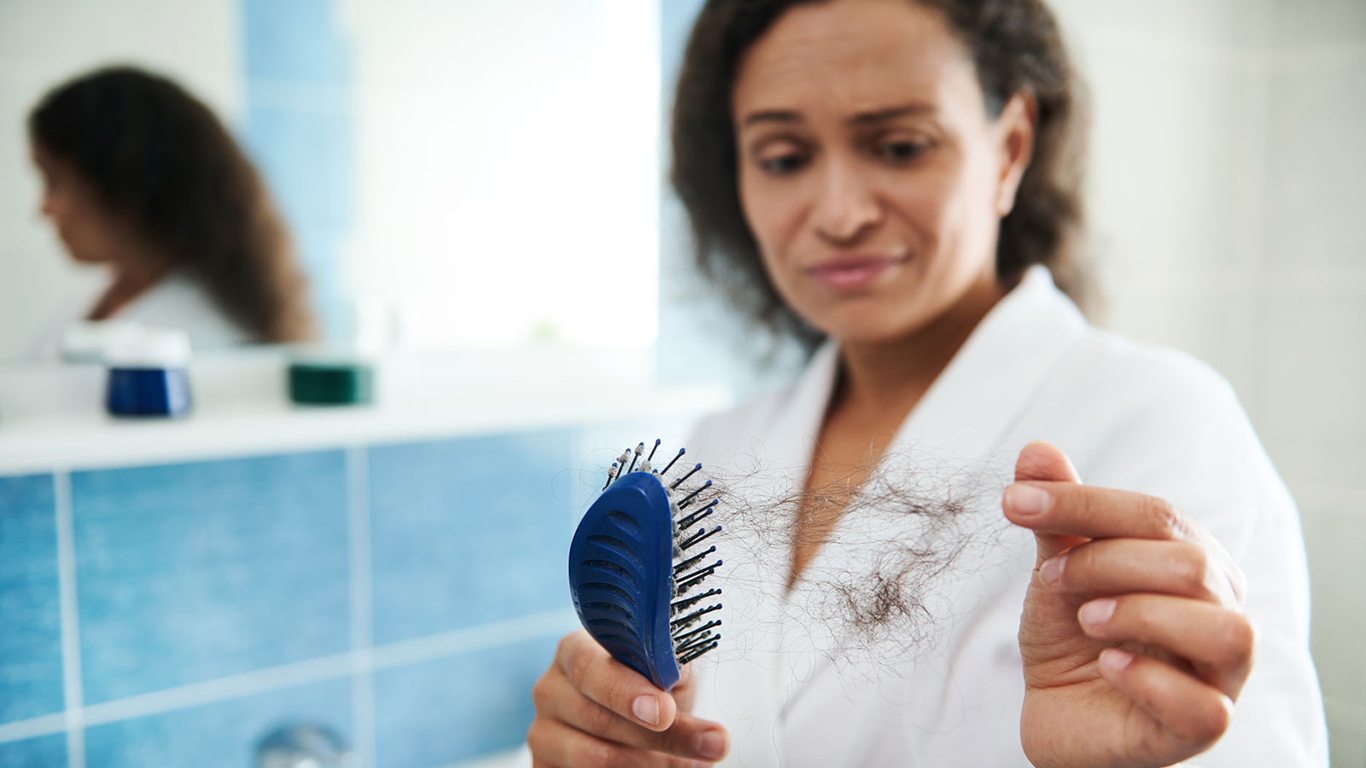
Sometimes the most useful question about sudden hair shedding is not “What happened this week?”
It is “What happened two or three months ago?”
A significant illness, high fever, operation or other major physical stress can disturb the normal hair cycle.
Hair responds slowly
Your follicles do not immediately drop their hairs the day you become ill.
A significant physical stress can cause more follicles than usual to move out of active growth and towards the resting phase. Those hairs are then shed later.
This is why someone can feel completely recovered from flu, an infection, surgery or another illness before suddenly noticing far more hair in the shower.
This type of shedding has a name
It is called telogen effluvium.
It usually causes increased shedding across the scalp rather than one sharply defined bald patch.
The delay often makes people blame whatever new shampoo, conditioner or salon treatment they happened to use shortly before the shedding became obvious, when the actual trigger occurred much earlier.
Does hair grow back?
When the trigger has passed and there is no other ongoing cause, telogen effluvium can improve as the hair cycle normalises.
But not every case of diffuse thinning is telogen effluvium.
Iron deficiency, thyroid disease, medication, pattern hair loss and other conditions can occur at the same time, which is why persistent shedding needs proper assessment.
Medication can also be relevant
Hair loss is a possible side effect of some medicines.
That does not mean you should stop taking a medicine because you notice increased hair in the shower.
Speak to the doctor who prescribed it. Abruptly stopping certain medicines can create far more serious problems than hair shedding.
What should make you seek help sooner?
Diffuse shedding after an illness is one thing.
Smooth bald patches, a painful or burning scalp, significant redness, thick scaling, scarring or progressive patterned thinning can point to something different.
Those signs deserve assessment by a GP or dermatologist.
Be kind to the hair you still have
A period of heavy shedding often makes people attack the problem from every direction — more treatments, more brushing, less shampoo, lots of supplements and several new products at once.
That can make an already stressful experience harder.
Keep your routine simple. Clean the scalp as needed, condition the hair, reduce unnecessary pulling and avoid piling aggressive chemical treatments onto already fragile lengths.
Gentle support while your hair cycle recovers
When hair starts shedding after an illness, the instinct is often to try everything at once.
In reality, this can be a good time to do the opposite.
If the underlying illness has resolved and your healthcare professional is happy with your recovery, keep your hair-care routine simple, gentle and consistent. Netwurks Pro can help maintain a clean, comfortable scalp while conditioning hair that may temporarily feel thinner, drier or more difficult to manage.
The goal is not to force the hair cycle to change. It is to take care of the scalp and protect the existing strands from additional stress while your body recovers.
Avoid aggressive styling, unnecessary pulling and excessive chemical processing, and give persistent or unusual shedding the professional attention it deserves.