Home » All Articles » Hair Loss » The Most Common Causes of Thinning Hair in Women
The Most Common Causes of Thinning Hair in Women
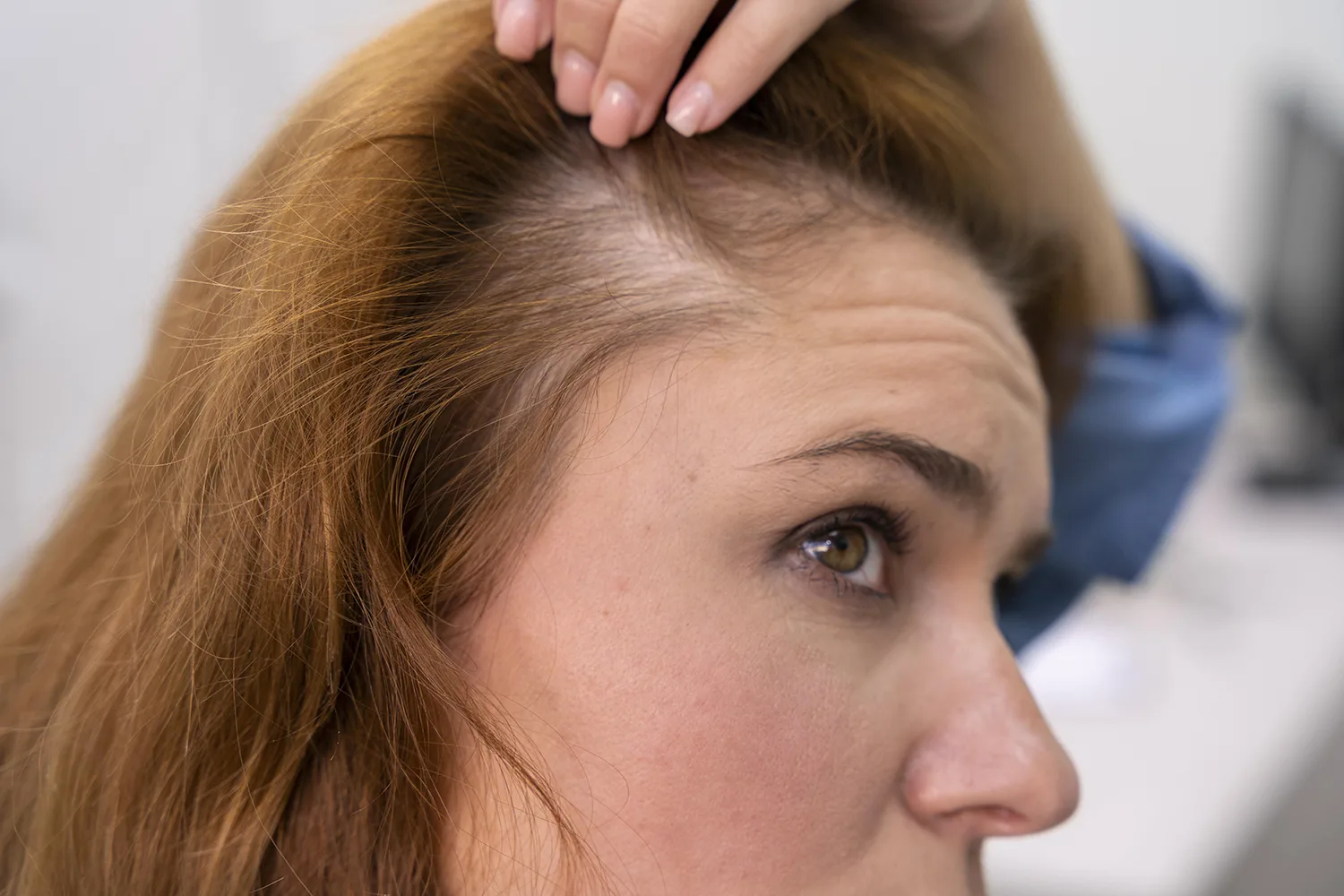
Thinning hair is rarely caused by one thing. More often, it is the result of several factors happening at once: age, hormones, stress, nutrition, styling habits and genetics.
Aging
For many women, thinning becomes more noticeable in their 40s, 50s or 60s. The American Academy of Dermatology identifies female pattern hair loss as the most common cause of hair loss in women. It often begins with a widening part, reduced density over the crown or thinning around the temples. (American Academy of Dermatology)
Hormonal Shifts
Hormonal shifts can also play a role. Changes linked to menopause, pregnancy, stopping certain contraceptives or conditions such as PCOS may affect hair density. The AAD notes that hormonal imbalance can contribute to thinning or hair loss on the scalp. (American Academy of Dermatology)
Stress
Stress is another major trigger. Telogen effluvium, a temporary shedding condition, can follow physical or emotional stress, illness, surgery, fever, childbirth or weight loss. Cleveland Clinic describes it as rapid hair shedding caused by stress or a change in the body. (Cleveland Clinic)
Nutrition
Nutrition matters too. A scientific review published via NIH notes that nutritional deficiencies can affect both hair structure and hair growth, including deficiencies linked to protein, iron and other nutrients. (PMC)
Styling
Then there are everyday styling habits. Tight hairstyles, aggressive brushing, repeated heat styling, bleaching and chemical processing can weaken the hair fibre and increase breakage. This may make hair look thinner even when the follicle itself is still active.
What you can do
A good routine cannot correct every cause of hair thinning, but it can support the visible quality of the hair and scalp. Netwurks Pro focuses on scalp hydration, stronger-looking strands and healthier-looking hair, with ingredients chosen to support moisture, softness, shine and breakage care. (NetwurksPro)
The smartest first step is to identify the pattern: shedding, gradual thinning or breakage. The second is to support the scalp and hair consistently while seeking professional guidance if symptoms persist.